
Backgammon Club
GameClubUSA.comBoard
3.3150.00 Reviews
- Version
- 2.2.3
- Installs
- 100.00K
- Age Rating
- Teen
Screenshots
Our Review of Backgammon Club
 Analysis by Appyee
Backgammon Club is the kind of board game I open when I want a familiar match without carrying a physical board around. It is a free Android game from GameClubUSA.com, built around online backgammon on phones and tablets, with games and tournaments as its central appeal. After spending time with it, I found the experience most rewarding for players who already understand the basics and want regular competition rather than a long tutorial-driven introduction.
The game has a straightforward identity: roll, move, bear off, and try to make better decisions than the person on the other side of the match. That simplicity is exactly why backgammon remains easy to return to, but it also means the quality of the surrounding experience matters. Matchmaking, tournament access, the clarity of the board, and the way the game handles interruptions all influence whether a quick game feels relaxing or frustrating.
How Backgammon Club feels in everyday play
The first thing I noticed is that this is not trying to turn backgammon into an action game. The pace is naturally measured, and each turn gives me time to examine the board before committing to a move. That makes it suitable for short breaks, provided I am willing to finish a match rather than treat it like a game that can always be paused and abandoned.
A realistic use case is a commute or a quiet evening when I want something more thoughtful than a puzzle that solves itself. I can play a few turns, reassess the position, and focus on risk management instead of reflexes. Backgammon rewards recognizing exposed checkers, building points, and deciding when an aggressive play is worth the danger. The app therefore works best when I want a compact strategic contest, not merely a way to fill a few seconds.
The online focus gives the game more life than a purely local board. A human opponent creates uncertainty that a predictable computer player cannot fully reproduce. Even when I make a poor decision, the match can remain interesting because the other player may respond in an unexpected way. That is a meaningful advantage for anyone who has already grown tired of practicing against the same artificial patterns.
At the same time, online play changes the mood. A match depends on another person staying engaged, and a slow or interrupted opponent can make the experience less smooth. Backgammon is already deliberate, so delays are more noticeable than they would be in a fast arcade title. I would approach it as a game for patient players rather than people who want instant rounds with no social or connection-related friction.
The board rewards deliberate decisions
One useful way to play is to treat every turn as a small risk calculation instead of chasing the biggest possible move. I found it helpful to first check whether any checker is left vulnerable, then look for a move that improves my structure, and only afterward consider a more ambitious hit or race. This habit is especially valuable on a mobile screen, where quickly tapping the most obvious move can lead to avoidable mistakes.
Players who know the rules but have not developed a consistent routine can use each match as a decision journal in their head. After a loss, I would ask whether the problem came from overextending, entering a race too early, or failing to protect a valuable point. That approach extracts more value from the game than simply replaying matches and hoping the dice become kinder.
The tournament angle also changes how I think about sessions. A casual game can be played with a relaxed attitude, while a tournament encourages me to protect a lead and avoid unnecessary complications. Even without treating every match as a serious competition, the presence of tournaments gives experienced players a reason to return after ordinary games begin to feel repetitive.
What the free download really means
Backgammon Club is free to download and play, which makes trying it low-risk. I can find out whether the board presentation, online format, and tournament style suit me without paying an entry cost simply to test the core experience. That is the strongest part of its value: the basic decision to explore the game does not require a purchase.
There are in-app purchases priced from $2.99 to $17.99 per item. I would not treat those optional purchases as part of the guaranteed value of the free experience. Their presence matters because a player should decide in advance whether the free version is enough and avoid assuming that every available convenience or extra is included without payment.
For me, the sensible approach is to play several sessions before spending anything. If I mainly want occasional matches, the free access may already meet the need. If I become a regular tournament player, I can then judge whether a purchase adds enough practical value to justify its price. That is a better decision than buying immediately because the game happens to be familiar.
The important distinction is between access and long-term value. Free access lets me evaluate the game, but it does not automatically make every paid item worthwhile. The game’s value comes primarily from whether I enjoy its online backgammon loop and return to it often. A purchase only makes sense when it supports that established habit rather than trying to create one.
Who will enjoy it most
I would recommend this game first to people who already know how backgammon works. Beginners can still try it, but the experience is more enjoyable when terms such as hitting, making a point, and bearing off are not completely new. Without that foundation, an online match can feel like a series of confusing dice outcomes rather than a contest shaped by meaningful choices.
It is also a good fit for players who prefer board games with a mix of luck and planning. Backgammon never gives complete control over the result, and that is part of its character. Strong decisions improve a position, but they do not guarantee a win. If I want a game where careful play always defeats chance, I would choose a more deterministic strategy title instead.
People who enjoy tournaments may find more reason to stay engaged than players seeking only a solo pastime. The competitive structure gives a session a clearer purpose, while ordinary online games are better for practicing patience and reading positions. I would especially consider it for someone who likes traditional games but wants the convenience of playing through an Android phone or tablet.
On the other hand, I would skip it if I dislike waiting for opponents, have little interest in online competition, or want a large range of board-game genres in one app. This is a focused backgammon product, not a general board-game collection. Someone looking for chess, checkers, card games, or a broad family-game hub will get better value from a different type of app.
How it compares with familiar alternatives
Compared with a physical backgammon set, the app is easier to carry and removes the need to find another person in the same room. That convenience is its clearest advantage. A physical board still feels better for players who enjoy face-to-face conversation, handling the pieces, and controlling the pace themselves. The choice depends less on the rules than on whether I value portability or the atmosphere of an in-person match.
Compared with a solo backgammon app, the online emphasis offers more unpredictable opposition. A computer opponent can be useful for learning legal moves or practicing a particular situation, but human play creates a different kind of pressure. The trade-off is that a solo alternative is usually easier to start, stop, and repeat on my own schedule.
Compared with a broader online board-game platform, Backgammon Club has a narrower purpose. That can be a strength when I want to reach backgammon quickly rather than browse a catalog. It can also be a weakness if I expect variety after a few matches. I would choose the focused app for commitment to one classic game and a wider platform for mixed board-game nights.
The rating sits at an average of 3.3 from around 2.1 thousand ratings, with roughly 150 written reviews. I read that as a signal to keep expectations measured rather than assuming the experience will suit everyone. The game has passed the early curiosity stage, with more than 100 thousand installs, but popularity alone does not resolve the practical question of whether its online flow matches my habits.
Small habits that improve the experience
My first tip is to slow down before every move, especially when the dice offer several legal choices. On a phone, it is tempting to tap quickly and move on, but the strongest play may involve leaving a less obvious checker in place. I also recommend checking the whole board rather than focusing only on the home board, because a move that looks safe nearby can create a problem elsewhere.
My second tip is to separate a bad roll from a bad decision. Losing after an unlucky sequence is part of backgammon, but reviewing the move I controlled helps me improve. This mindset prevents the common mistake of changing strategy randomly after every defeat. It also makes tournaments less emotionally exhausting, since not every loss needs to be treated as evidence that the entire approach was wrong.
My third tip is to decide what kind of session I am starting. If I have only a few minutes, beginning a match may be a poor choice if I cannot give it steady attention. If I have a longer break, online play becomes more attractive because I can think through positions instead of rushing. This simple planning step reduces frustration and makes the game feel more intentional.
I would also keep spending separate from competitive emotion. A close loss can make a paid purchase feel like a way to improve the situation, even when the real issue was a risky move or an unlucky roll. Since the game is free to try and the purchases range from $2.99 to $17.99, I would only consider buying after deciding what I actually want from the app and whether I am using it regularly.
Device fit, audience, and practical expectations
The game supports Android 7.0 and later, so compatibility should be checked against the device before installation. It is marked for a Teen audience, which is worth remembering for families deciding whether it fits a younger player. The age label does not change the basic board-game nature of the app, but it is still part of the practical decision about who should use it.
The current version is 2.2.3. I would keep the app updated through the normal store process, particularly for an online game where the quality of the experience depends on communicating with other players. I would also prefer a stable connection before starting a serious match; even a well-designed board game becomes inconvenient when an online session is interrupted.
GameClubUSA.com has kept the product centered on a recognizable classic rather than adding unnecessary complexity. That focus is welcome, but it means the app’s appeal depends heavily on whether I already enjoy backgammon. There is no reason to install it merely because it is free if I do not like turn-based competition or the uncertainty created by dice.
My buying decision after playing
My overall view is positive but specific: Backgammon Club is worth trying for an Android player who wants free access to online backgammon and is interested in games or tournaments. The free entry point gives me enough room to judge the board, the pace, and the opponent experience before considering any purchase. That is a fair arrangement for a specialized board game.
I would not call it the best choice for everyone. A beginner who wants extensive instruction may prefer a learning-focused alternative, while a player who wants many different games may be happier with a larger board-game platform. Someone who values a quiet offline session should also look elsewhere if online interaction is central to the experience they want.
For the right player, the strongest value is repeatability: each match asks me to balance chance, position, and patience in a compact format. The free price makes experimentation easy, while the in-app purchase range means I should remain deliberate about spending. My recommendation is to install it, play without paying first, and buy only if the online and tournament experience becomes a regular part of your routine.
In short, Backgammon Club is a focused board game rather than a universal gaming app. I would recommend it to an experienced or curious backgammon player who wants portable online matches and accepts the occasional friction of human competition. If that description sounds like you, it offers a practical way to keep the classic game close at hand; if not, its narrow focus will probably become apparent quickly.
Verdict
Strengths of Backgammon Club
- Easy-to-learn rules make it accessible to beginners.
- Online matches provide a convenient way to play anytime.
- Quick rounds suit short gaming sessions.
- Practice against AI helps improve strategy.
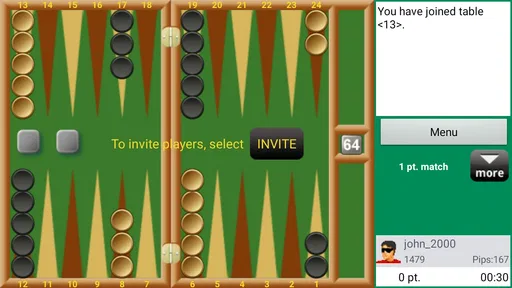
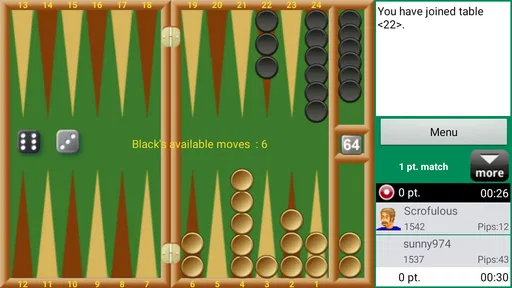
- Clean board design keeps moves easy to follow.
Limitations of Backgammon Club
- Matchmaking quality may vary depending on player availability.
- Advanced players may find the strategic options limited.
- Some features may require an internet connection.
- Ads can interrupt the experience for free users.
- Random dice rolls may feel frustrating during competitive games.
Similar Picks in This Category
View All
Ludo King®
Gametion4.1

Ludo
Yarsa Games4.6

Tile Master® - Matching Game
Higgs Studio3.6

Checkers Online
CC Games4.6

Dominoes
Loop Games4.7

Chess
Chess Prince4.6
Frequently Asked Questions
What is Backgammon Club and how is the game played?
Backgammon Club is a digital version of the classic board game in which two players race their checkers around the board while using dice rolls to make strategic moves. The app is designed for both casual matches and more competitive play, making it suitable for beginners who want to learn the rules as well as experienced players looking for regular games on a mobile device.
Can beginners learn how to play Backgammon Club easily?
Yes. Backgammon Club is generally approachable for new players because the basic objective and checker movement are easy to understand after a few turns. Beginners should still take time to learn concepts such as hitting exposed checkers, creating blocked points, bearing off, and managing risk. Playing practice matches before entering more competitive games is a good way to build confidence.
Does Backgammon Club let me play against real people or the computer?
Backgammon Club may offer different ways to play, including matches against computer-controlled opponents and online games with other players, depending on the version and platform you install. Computer matches are useful for practicing at your own pace, while multiplayer games provide a more unpredictable challenge. Check the app’s current feature list to confirm available modes and matchmaking options.
Does Backgammon Club require an internet connection?
An internet connection is usually needed for online multiplayer, account features, advertisements, leaderboards, and other connected services. Some versions may allow limited offline play against the computer, but this can vary by device and app release. If you plan to play while traveling or without mobile data, test the available offline modes first and review the app’s requirements before downloading.
Is Backgammon Club free to download, and does it include in-app purchases?
Backgammon Club may be free to download, but free access can be supported by advertisements, optional purchases, or premium features. Depending on the version, payments may unlock cosmetic items, remove ads, provide additional content, or support other gameplay options. Before installing, review the store listing for the latest pricing, subscription details, and any age or payment restrictions.
Play our best games!


